Where to Invest in Crypto: The Best Countries for Tax Benefits and Regulations
A global 2025 guide to tax-friendly, regulation-stable, and investor-safe countries for cryptocurrency investing.


- Global Landscape of Crypto Taxation & Regulation in 2025
- Why Geography Matters More Than Ever in 2025
- 1. Clearer Tax Frameworks Worldwide
- 2. Regulatory Maturity & Risk Removal
- 3. Global Competition to Attract Crypto Capital
- Global Crypto Investment Map (2025 YTD)
- How Countries Regulate and Tax Crypto: The Four Global Models
- Model 1 — Tax Havens With Zero Capital Gains (Investor-Focused)
- Model 2 — Progressive, Transparent, and Innovation-Driven (Regulation + Tax Balance)
- Model 3 — Residency-Based Benefits (Optimized for Digital Nomads)
- Model 4 — High-Risk, High-Opportunity Zones (Policy Experiments)
- Table 1 — Four Global Crypto Tax Models (2025 Overview)
- How to Evaluate a Country Before Investing in Crypto (2025 Framework)
- 1. Taxation Layer (The Most Important Financial Variable)
- 2. Regulatory Layer (Risk of Legal Uncertainty)
- 3. Banking & Fiat On-Ramp Layer
- 4. Digital Residency & Business Environment
- 5. Political & Macro Stability
- Country-by-Country Analysis: Where Crypto Investors Benefit Most in 2025
- Table 2 — Global Ranking: Best Countries for Crypto Investors (2025 Edition)
- United Arab Emirates (UAE) — The Global Leader in Crypto-Friendly Regulation
- Why Investors Choose the UAE
- Singapore — A Stable, Long-Term Hub for Global Investors
- Why Singapore Attracts Investors
- Switzerland — The Most Mature Regulatory Framework
- Why Switzerland Stands Out
- Portugal — A Lifestyle + Tax Hybrid for Crypto Users
- Germany — Long-Term Investors’ Hidden Advantage
- Crypto held for more than one year is completely tax-free.
- Hong Kong — Re-Emerging as a Global Crypto Financial Centre
- Why Hong Kong Matters in 2025
- Malta — The Original “Blockchain Island”
- Table 3— Tax Comparison: Short-Term vs Long-Term Crypto Policies (2025)
- El Salvador — High Reward, High Risk
- How to Choose the Best Country for Crypto Investing (Based on Your Profile)
- Part 1 — A Practical Framework for Choosing Your Ideal Crypto Jurisdiction
- 1. Tax Benefit (Short-Term vs. Long-Term)
- 2. Regulatory Predictability
- 3. Banking Accessibility
- 4. Residency / Relocation Requirements
- 5. Business Ecosystem & Corporate Structuring
- Part 2 — Which Country Fits Your Investor Profile?
- Profile A: Long-Term Holders (BTC + ETH Investors)
- Why These Countries Fit
- Ideal For
- Profile B: Active Traders & High-Volume Participants
- Reasoning
- Key Advantage
- Profile C: Crypto Entrepreneurs & Startup Founders
- Why
- Who Should Choose These Zones
- Profile D: Institutional Investors, Funds, and Family Offices
- Profile E: High-Risk, High-Reward Investors
- Why
- Downside
- Part 3 — Table: Country Comparison Based on Investor Profiles
- Part 4 — Example Scenario: What If You Are a Retail Investor With $10,000 in Crypto?
- Part 5 — Example Scenario: A Founder Launching a Web3 Startup in 2025
- UAE (DMCC / ADGM)
- Switzerland
- Part 6 — Regulatory Momentum & Future-Proofing (2025–2027)
- Trend 1 — More Countries Introducing Clear Crypto Tax Rules
- Trend 2 — Institutional Adoption Expands Tax Incentives
- Trend 3 — UAE Will Push Global Leadership
- Trend 4 — Cross-Border Crypto Reporting Will Become Standard
- Part 7 — Market Behavior and Regional Stability
- How to Decide Where to Invest
- 1. Am I trading or holding long-term?
- 2. Do I need a corporate structure for my project?
- 3. Do I want lifestyle + crypto tax benefits?
- 4. Do I need strong banking?
- 5. Am I comfortable with risk?
- 6. Do I want global access to investors?
- ⚠️ Disclaimer (Legal Notice)
Global Landscape of Crypto Taxation & Regulation in 2025
Cryptocurrency investing in 2025 is shaped by a dramatic shift in how governments classify, regulate, and tax digital assets. What once looked like an unstructured global marketplace has evolved into a multi-layered regulatory map—one where the geographic location of an investor can significantly influence net returns, legal clarity, operational freedom, and overall risk exposure.
Today, investors are no longer simply asking “Which crypto should I buy?”
They are asking a far more strategic question:
“Where should I legally position myself to maximize returns while minimizing tax friction and regulatory uncertainty?”
This is exactly why choosing the right country matters—not just for traders, but for long-term holders, startup founders, miners, funds, and digital nomads.
Why Geography Matters More Than Ever in 2025
Three global megatrends now define where crypto investors choose to operate:
1. Clearer Tax Frameworks Worldwide
Dozens of countries have published detailed taxation rules:
-
Hold periods that eliminate capital gains
-
Differentiation between occasional vs. professional trading
-
Business tax obligations for crypto services
-
Staking, mining, airdrops, and DeFi income classification
This clarity reduces operational uncertainty and improves long-term planning.
2. Regulatory Maturity & Risk Removal
Regulators in leading jurisdictions now provide:
-
Licensing frameworks for exchanges
-
Custody standards
-
Anti-money-laundering (AML) structures
-
Token classification (utility vs. security vs. payment tokens)
This gives investors legal predictability—a critical requirement in 2025.
3. Global Competition to Attract Crypto Capital
Countries have realized that crypto investment boosts:
-
tax revenue
-
fintech innovation
-
job creation
-
foreign direct investment
-
startup ecosystems
This competition creates crypto-friendly hubs with incentives such as:
-
0% capital gains tax
-
residency benefits
-
corporate tax exemptions
-
regulatory sandboxes
These hubs now shape the landscape of where smart investors relocate.
Global Crypto Investment Map (2025 YTD)
Market cap growth mirrors the regulatory stability of leading jurisdictions. The countries attracting institutional inflows—UAE, Singapore, Switzerland, Germany—are the same countries building the strongest legal frameworks.
How Countries Regulate and Tax Crypto: The Four Global Models
Every country in 2025 falls into one of the following models.
This classification helps investors understand why certain locations dominate crypto migration trends.
Model 1 — Tax Havens With Zero Capital Gains (Investor-Focused)
Countries in this group offer:
-
0% capital gains tax on crypto
-
No income tax on occasional trading
-
No wealth tax
-
No corporate tax in specific zones
Examples: UAE, Cayman Islands, BVI, Bermuda, Bahrain
Suitable for:
Long-term holders, funds, founders, and high-net-worth individuals seeking tax efficiency.
Model 2 — Progressive, Transparent, and Innovation-Driven (Regulation + Tax Balance)
These countries impose low or moderate taxes but offer exceptional regulatory clarity:
-
Crypto treated as property or an investment asset
-
Long-term gains often tax-free
-
Strong startup ecosystems
Examples: Germany, Switzerland, Singapore
Suitable for:
Investors who prefer stability, strong legal systems, and economic security.
Model 3 — Residency-Based Benefits (Optimized for Digital Nomads)
Countries where residency provides tax advantages, including:
-
long-term exemptions
-
foreign income exclusions
-
favorable classification for crypto income
Examples: Portugal, Malaysia, Malta
Suitable for:
Digital nomads, part-time investors, and remote workers.
Model 4 — High-Risk, High-Opportunity Zones (Policy Experiments)
These countries provide aggressive incentives but come with political or economic instability.
Examples: El Salvador, Belarus (until 2025)
Suitable for:
Risk-tolerant investors seeking asymmetric opportunities.
Table 1 — Four Global Crypto Tax Models (2025 Overview)
| Model | Tax Treatment | Regulation Style | Suitable For | Risk Level |
|---|---|---|---|---|
| 1. Zero-Tax Hubs | 0% capital gains, no income tax | Clear + business-friendly | HNWIs, funds, founders | Low |
| 2. Balanced Innovation Hubs | Low–moderate tax, long-term exemptions | Strong legal clarity | Long-term investors | Very Low |
| 3. Residency Advantage Countries | Tax benefits via residency | Moderate but predictable | Nomads, part-time traders | Medium |
| 4. Experimental Zones | Aggressive incentives | Developing frameworks | High-risk explorers | High |
How to Evaluate a Country Before Investing in Crypto (2025 Framework)
This is where Forvest’s analytical approach becomes essential.
Investors must look far beyond “tax rates.” They need a structured, data-based evaluation system.
Here is the modern framework used by analysts:
1. Taxation Layer (The Most Important Financial Variable)
Countries differ by:
-
Capital Gains Tax (CGT)
-
Income tax for frequent traders
-
Corporate tax for crypto businesses
-
Taxation of staking, mining, airdrops, and DeFi yield
-
Wealth tax (Switzerland, some EU regions)
Key question:
How does the tax treatment affect long-term compounding?
2. Regulatory Layer (Risk of Legal Uncertainty)
Essential evaluation criteria:
-
Licensing requirements
-
Custody rules
-
Exchange operation frameworks
-
Limits on transfers or reporting obligations
-
Clarity of token classification
A country with unclear regulation → high long-term friction and legal risk.
3. Banking & Fiat On-Ramp Layer
Questions investors must ask:
-
Does the country allow easy on/off ramps?
-
Are crypto-friendly banks available?
-
Are stablecoins recognized?
-
Does capital flow freely across borders?
Weak fiat access = constant operational bottlenecks.
4. Digital Residency & Business Environment
Important for founders and funds:
-
Can you open a company easily?
-
Is licensing expensive?
-
Are startup zones available?
-
Does the country support Web3 talent visas?
This layer separates real hubs (UAE, Singapore) from shallow jurisdictions.
5. Political & Macro Stability
A country may offer zero tax but carry:
-
currency instability
-
political risk
-
inconsistent policy changes
High-risk regions may cancel their advantages overnight.
Country-by-Country Analysis: Where Crypto Investors Benefit Most in 2025
Choosing the right country for cryptocurrency investing in 2025 is no longer just about finding low taxes. Investors now evaluate a combination of regulatory clarity, business environment, banking access, residency options, and long-term economic stability. In this section, we compare the world’s leading destinations for crypto-friendly policies and explain what types of investors benefit most from each region.
Rather than listing countries randomly, this analysis is structured into a performance-based framework:
Tax Advantage → Regulatory Clarity → Banking Support → Residency → Business Infrastructure → Risk Factors.
This gives investors a realistic picture of how each jurisdiction behaves—not just on paper, but in practice.
Table 2 — Global Ranking: Best Countries for Crypto Investors (2025 Edition)
This table gives a high-level snapshot of tax benefits, regulations, and suitability for different investor types.
| Country | Tax Policy (Crypto) | Regulatory Clarity | Banking Support | Best For | Risk Level |
|---|---|---|---|---|---|
| UAE (Dubai/Abu Dhabi) | 0% capital gains, 0% income tax | Very High (VARA/ADGM) | Strong | High-net-worth individuals, startups | Low |
| Singapore | 0% capital gains | High (MAS Framework) | Excellent | Long-term investors, builders | Low–Medium |
| Switzerland | 0% capital gains (individuals) | Very High | Strong | Institutional investors | Low |
| Portugal | Long-term gains tax-free | Medium | Moderate | Digital nomads, retail investors | Medium |
| Germany | 0% tax after 1-year holding | High | Strong | Long-term holders | Low |
| Malta | Exemptions on long-term gains | Medium | Good | Crypto companies | Medium |
| Hong Kong | No capital gains tax | Medium–High | Strong | Traders, global firms | Medium |
| El Salvador | 0% gains on Bitcoin | High adoption, low stability | Weak–Moderate | High-risk investors | High |
United Arab Emirates (UAE) — The Global Leader in Crypto-Friendly Regulation
The UAE stands as the most attractive destination for crypto investors in 2025. With 0% tax, specialized regulatory bodies like VARA, and powerful business zones such as DMCC Crypto Centre and ADGM, the UAE has become a global magnet for investors, founders, and institutional capital.
Why Investors Choose the UAE
-
No capital gains, income, or personal tax on crypto
-
Regulatory stability through VARA (Dubai) and FSRA (Abu Dhabi)
-
Rapid licensing for crypto companies
-
High banking accessibility compared to most crypto hubs
-
Large expatriate community and strong global connectivity
The UAE is especially suitable for high-net-worth individuals, crypto funds, exchanges, research firms, and founders seeking tax-efficient corporate structures.
Singapore — A Stable, Long-Term Hub for Global Investors
Singapore offers a unique combination of 0% capital gains tax, strict compliance standards, and a highly respected regulatory environment. Under MAS (Monetary Authority of Singapore), crypto is recognized as a legitimate financial activity with well-defined licensing pathways.
Why Singapore Attracts Investors
-
No capital gains tax
-
Exceptional banking reliability
-
One of the world’s most stable economies
-
Strong talent base for fintech and blockchain
-
Attractive for family offices and institutional investors
Singapore is ideal for long-term investors, quant firms, global exchanges, and builders seeking a predictable regulatory environment.
Switzerland — The Most Mature Regulatory Framework
Often referred to as the Crypto Valley, Switzerland provides unmatched clarity around digital assets. Crypto is treated as a formal asset class, investors benefit from zero capital gains tax (for individuals), and the country hosts one of the world’s strongest banking ecosystems.
Why Switzerland Stands Out
-
Consistent regulatory clarity for years
-
High legal protection for investors
-
Strong ecosystem in Zug (Crypto Valley)
-
Clear guidelines for token classification
This jurisdiction is particularly attractive for institutional investors, asset managers, and long-term crypto asset holders.
Portugal — A Lifestyle + Tax Hybrid for Crypto Users
Portugal gained popularity for its formerly full tax exemption, but laws have evolved. As of 2025:
-
Long-term crypto gains (held >1 year) remain tax-free
-
Short-term gains may face tax
-
No VAT on crypto transactions
Despite regulatory adjustments, Portugal remains one of the most attractive destinations for digital nomads, remote workers, and moderate crypto investors.
Germany — Long-Term Investors’ Hidden Advantage
Germany introduced one of the most investor-friendly tax rules:
Crypto held for more than one year is completely tax-free.
This makes the country extremely appealing for long-term holders and portfolio builders who prefer stability over frequent trading.
Additional advantages include:
-
Clear classification of crypto as a financial instrument
-
Strong consumer protection laws
-
Europe’s largest and most stable economy
Germany is ideal for strategic long-term investors, compliance-focused firms, and individuals avoiding short-term speculation.
Hong Kong — Re-Emerging as a Global Crypto Financial Centre
Hong Kong regained attention in 2024–2025 after introducing clear guidelines for crypto exchanges and allowing regulated retail access to digital assets.
Why Hong Kong Matters in 2025
-
No capital gains tax
-
Strong banking networks
-
A bridge between Western and Asian markets
-
Interest from major institutional players
Hong Kong is suitable for professional traders, global companies, and firms accessing Asian liquidity.
Malta — The Original “Blockchain Island”
Malta offers tax exemptions for long-term crypto holdings and hosts a large number of crypto companies. Its regulatory framework is clear, business-friendly, and backed by years of digital asset legislation.
Best for:
-
Crypto business incorporation
-
Exchange and ecosystem development
-
Companies requiring EU compliance + tax relief
Table 3— Tax Comparison: Short-Term vs Long-Term Crypto Policies (2025)
| Country | Short-Term Crypto Gains | Long-Term Crypto Gains | Special Notes |
|---|---|---|---|
| UAE | 0% | 0% | No personal or capital gains tax under VARA/ADGM |
| Singapore | Income tax may apply for active traders | 0% | Clear licensing under MAS |
| Switzerland | Taxed as income if frequent trader | 0% (individuals) | Wealth tax applies in some cantons |
| Portugal | 28% tax if held < 1 year | 0% | Appeals to digital nomads |
| Germany | Taxed as income if <1 year | 0% after 12 months | Highly friendly for long-term investors |
| Malta | Business tax for active trading | Generally exempt | Strong corporate incentives |
| Hong Kong | Business tax for active trading | 0% | No CGT regime |
| El Salvador | 0% | 0% | High political/economic risk |
El Salvador — High Reward, High Risk
El Salvador is unique as the first country to adopt Bitcoin as legal tender. The government offers full tax exemption on all Bitcoin gains and incentives for crypto businesses. However, economic volatility and political risks make it more suitable for high-risk investors.
Not recommended for:
-
Beginners
-
Compliance-driven businesses
-
Investors needing stable banking
But still appealing for:
-
Bitcoin maximalists
-
High-risk crypto entrepreneurs
-
Investors seeking early-stage global opportunities
How to Choose the Best Country for Crypto Investing (Based on Your Profile)
Choosing the best country for cryptocurrency investing in 2025 depends on far more than taxes. While 0% capital gains looks attractive on paper, real-world decisions depend on banking reliability, regulatory stability, residency options, business incorporation pathways, and long-term economic predictability.
This section helps investors match their personal goals with the right jurisdiction—whether they are retail users, high-net-worth individuals, founders, funds, or long-term asset holders.
Before evaluating specific profiles, it is important to understand a core principle:
“The best country for crypto investing is the one that matches your long-term behavior—not your short-term tax optimization.”
This final section gives you a full decision-making framework to select the country that offers the right mix of safety, tax efficiency, banking access, and regulatory clarity.
Part 1 — A Practical Framework for Choosing Your Ideal Crypto Jurisdiction
Successful investors use a structured five-factor model to evaluate countries:
1. Tax Benefit (Short-Term vs. Long-Term)
Does the country tax gains based on holding period?
Does trading frequency trigger income tax?
Does the government differentiate between individual and business activity?
2. Regulatory Predictability
Are laws stable or constantly changing?
Is there a dedicated digital-assets authority (like VARA, MAS)?
Are exchanges well-regulated and accessible?
3. Banking Accessibility
Can individuals or companies easily open accounts?
Does the country support crypto-to-bank flows?
Is there strong compliance infrastructure?
4. Residency / Relocation Requirements
Do you need residency to access tax advantages?
Is the country suitable for long-term living?
5. Business Ecosystem & Corporate Structuring
Are there free zones or business hubs designed for digital assets?
Does the country support funds, exchanges, or tokenization startups?
Using this 5-layer framework makes it easier to evaluate real advantages rather than relying on marketing hype.
Part 2 — Which Country Fits Your Investor Profile?
Crypto investors are not all the same. A retail user with a small portfolio does not need the same jurisdiction as a fund manager or founder planning a token launch.
The following profile-matching guide helps you choose a country aligned with your needs.
Profile A: Long-Term Holders (BTC + ETH Investors)
Best Countries: Germany, Switzerland, UAE
Why These Countries Fit
-
Germany offers 0% tax after 12 months
-
Switzerland provides strong individual protection and no capital gains tax
-
UAE offers complete tax exemption regardless of holding period
Ideal For
-
Investors who rarely trade
-
Users building multi-year portfolios
-
Individuals avoiding frequent tax filings
Germany is especially powerful for retail users who want clarity and simplicity.
Profile B: Active Traders & High-Volume Participants
Best Countries: UAE, Singapore, Hong Kong
Reasoning
-
UAE offers no tax on short-term trading
-
Singapore provides clear MAS oversight and strong banking
-
Hong Kong allows regulated retail trading and has no capital gains tax
Key Advantage
These jurisdictions support fast on/off-ramp movement and professional-grade trading infrastructure.
Profile C: Crypto Entrepreneurs & Startup Founders
Best Countries: UAE (DMCC, ADGM), Malta, Switzerland**
Why
-
UAE free zones offer simplified licensing for crypto companies
-
Malta has a mature framework for exchanges and digital-asset businesses
-
Switzerland (Zug) is the global center for tokenization and Web3 legal structures
Who Should Choose These Zones
-
Token project founders
-
Research companies
-
Web3 infrastructure builders
-
Custody, compliance, and fintech firms
Founders benefit most from strong regulatory clarity + banking access.
Profile D: Institutional Investors, Funds, and Family Offices
Best Countries: Switzerland, Singapore, UAE**
These regions provide:
-
Trust-based banking systems
-
Multi-jurisdictional fund structures
-
Global investor protections
-
Strong legal frameworks
Switzerland remains the gold standard for institutional custody.
Profile E: High-Risk, High-Reward Investors
Best Country: El Salvador
Why
-
0% tax on Bitcoin
-
Government-driven crypto adoption
-
Unique legal tender environment
Downside
-
Economic and political instability
-
Weak traditional banking framework
This profile is only recommended for investors who understand macroeconomic and political risks.
Part 3 — Table: Country Comparison Based on Investor Profiles
| Investor Type | Best Countries | Why They Fit | Risk Notes |
|---|---|---|---|
| Long-Term Holders | Germany, Switzerland, UAE | Strong long-term exemptions | Very low |
| Active Traders | UAE, Singapore, Hong Kong | No CGT + strong banking | Low–Medium |
| Startup Founders | UAE (DMCC/ADGM), Malta, Switzerland | Clear licensing + ecosystems | Low–Medium |
| Institutions / Funds | Singapore, Switzerland, UAE | Regulatory maturity | Low |
| High-Risk Investors | El Salvador | BTC legal tender | High |
| Digital Nomads | Portugal, UAE | Lifestyle + tax flexibility | Medium |
Part 4 — Example Scenario: What If You Are a Retail Investor With ,000 in Crypto?
A retail user who wants simplicity should focus on:
-
Germany (0% tax after 12 months)
-
Portugal (long-term exemption)
-
UAE (full exemption, no holding rules)
If banking accessibility matters, Singapore or Switzerland may be preferable.
If lifestyle + cost of living matters, Portugal or UAE is the best choice.
Part 5 — Example Scenario: A Founder Launching a Web3 Startup in 2025
The two most realistic jurisdictions are:
UAE (DMCC / ADGM)
-
Fastest licensing
-
Deep crypto community
-
Investors and VCs relocate there
-
Strong international credibility
Switzerland
-
Unmatched clarity for token classifications
-
Regulatory depth for foundation structures
-
Most stable ecosystem for legal compliance
For developers and token founders, Switzerland remains the “safe center,” while UAE offers the fastest growth and funding ecosystem.
Part 6 — Regulatory Momentum & Future-Proofing (2025–2027)
The next two years will change the regulatory landscape significantly. Several trends matter:
Trend 1 — More Countries Introducing Clear Crypto Tax Rules
Governments are moving from ambiguity to structured policy, especially in Europe and Asia.
Trend 2 — Institutional Adoption Expands Tax Incentives
Countries with strong financial centers (Singapore, Switzerland) will likely enhance crypto benefits to attract capital.
Trend 3 — UAE Will Push Global Leadership
Dubai’s VARA is increasingly acting like a global benchmark.
Trend 4 — Cross-Border Crypto Reporting Will Become Standard
Countries are preparing frameworks similar to the OECD’s Crypto-Asset Reporting Framework (CARF).
Investors choosing countries now should consider these long-term regulatory signals—not just 2025 benefits.
Part 7 — Market Behavior and Regional Stability
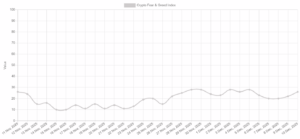
Below is a reference chart showing how global uncertainty impacts total market capitalization—a reminder that regulatory stability often translates to more stable market participation.
This helps show investors that jurisdictions with predictable legal frameworks tend to support steadier inflows during volatile market cycles.
How to Decide Where to Invest
To choose the best country for crypto investing, ask yourself:
1. Am I trading or holding long-term?
→ Germany, Switzerland, UAE
2. Do I need a corporate structure for my project?
→ UAE, Switzerland, Malta
3. Do I want lifestyle + crypto tax benefits?
→ Portugal, UAE
4. Do I need strong banking?
→ Switzerland, Singapore, Hong Kong
5. Am I comfortable with risk?
→ El Salvador (high risk, high reward)
6. Do I want global access to investors?
→ UAE, Singapore
There is no universal best country, only the best fit for your behavior and goals.
To compare crypto fundamentals before investing, see:
👉 Forvest Trust Score Analysis
To build a long-term portfolio after relocation, explore:
👉 Forvest Portfolio Management Ability
To start learning from zero, read:
👉 How to Invest in Cryptocurrency: Step-by-Step Beginner’s Guide
This completes the full blog structure.
⚠️ Disclaimer (Legal Notice)
This article is for educational purposes only and does not provide tax, legal, financial, or investment advice. Cryptocurrency regulations and tax policies vary by country and may change over time. Always verify current laws with official government sources and consult a qualified tax advisor or legal professional before making decisions related to relocation, investment, or corporate structuring.
Nothing in this article should be interpreted as a recommendation to buy, sell, or hold any digital asset or to establish residency or business operations in any jurisdiction. Investors are solely responsible for evaluating risks and complying with local regulations.
Rating of this post
Rate
If you enjoyed this article, please rate it.
FAQ
Consider tax policies, regulatory clarity, financial infrastructure, ease of banking, and economic stability.
Countries like the UAE, Cayman Islands, Bermuda, and BVI impose no capital gains tax on crypto investments.
Yes, all mentioned countries have legal frameworks for crypto, but regulations vary. Some countries actively regulate exchanges, while others have looser policies.
Germany, Switzerland, and Portugal offer favorable tax conditions for long-term investors.
The Cayman Islands, Bermuda, BVI, and Malta provide business-friendly crypto regulations with tax advantages.
Some countries, like Switzerland and Singapore, have crypto-friendly banks, while others may have stricter banking policies.
Yes, regulations are evolving, so staying informed and consulting legal experts is essential before making investment decisions.
Rating of this post
Rate
If you enjoyed this article, please rate it.