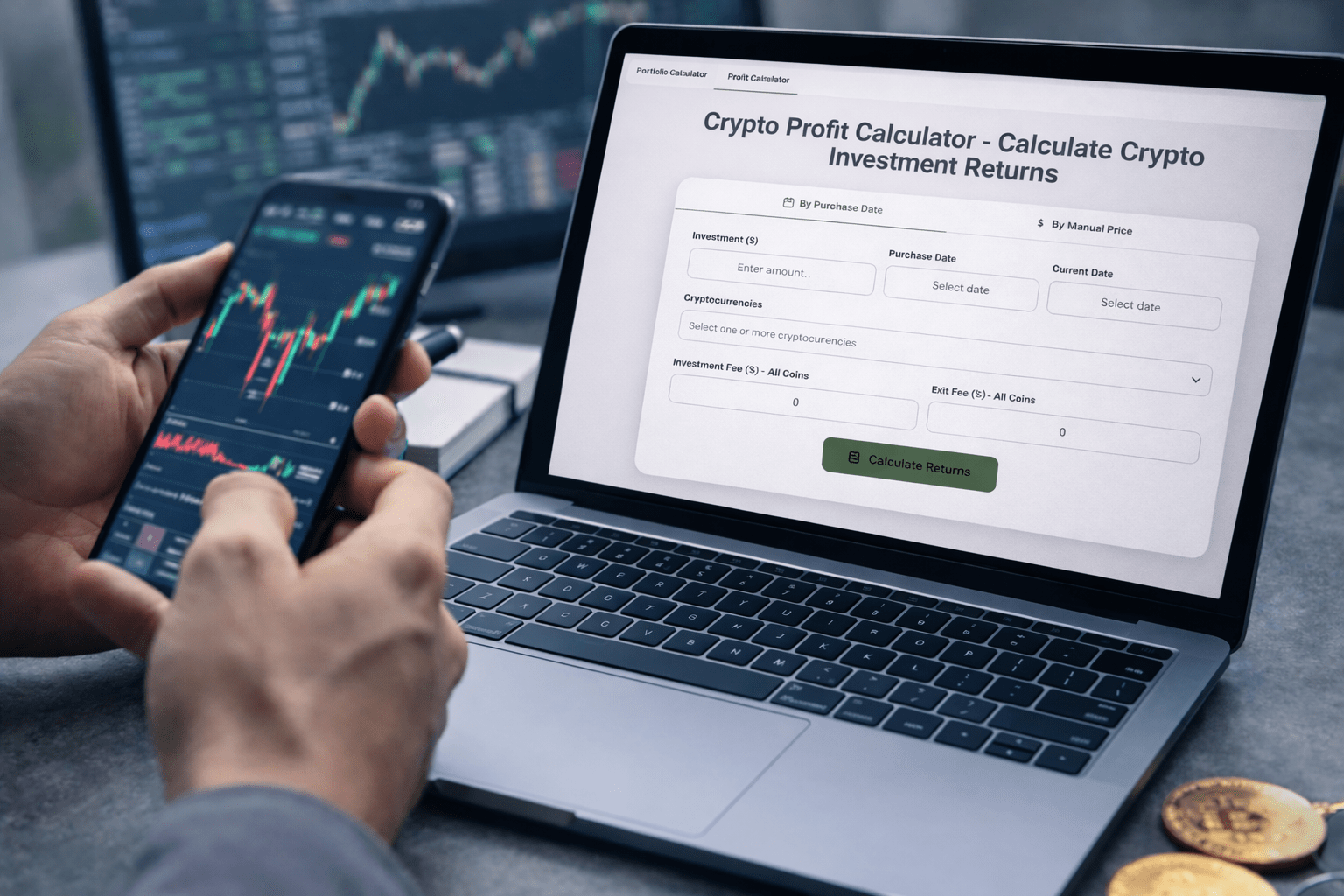


Crypto portfolio optimization is the process of improving how a portfolio is structured for a defined goal and risk limit. It is not a promise to earn more without risk. For a long-term investor, the practical job is to set target weights, measure concentration and portfolio drift, account for correlation and liquidity, and rebalance only when a documented rule justifies the cost.
Short answer: start with the role of crypto in your total investment plan, not with a list of coins. Then define eligible assets, a maximum allocation, position limits and a review rule. Measure the current portfolio against that policy. An optimization is useful only if it makes the portfolio easier to understand, maintain and survive through adverse conditions.
Crypto assets can be extremely volatile and less liquid than traditional investments, and losing the full amount invested is possible. FINRA’s crypto-asset risk guidance identifies asset allocation and diversification as important risk-management principles. This article is an educational framework, not a personalized allocation recommendation.
What Is Crypto Portfolio Optimization?
Portfolio optimization means choosing and maintaining a mix of assets that is consistent with an investor’s objective, time horizon, loss capacity and operating constraints. In practice, it answers five questions:
- How much of the investor’s total investable assets may be exposed to crypto?
- Which crypto assets are eligible and why?
- What is the target weight and maximum weight for each position?
- Which risks are repeated across several positions?
- When is a rebalance worth the fees, spread, tax impact and effort?
Optimization is therefore different from picking the coin with the highest expected return. Expected returns are uncertain, historical relationships change, and an apparently precise model can fail when market conditions change. A durable process uses ranges, scenarios and limits rather than treating one model output as a command.
| Optimization decision | Evidence to review | Common mistake |
|---|---|---|
| Total crypto allocation | Goal, time horizon, income stability and ability to absorb loss | Starting with coin weights before deciding how much crypto risk is acceptable |
| Asset selection | Security, liquidity, token structure, custody and investment thesis | Adding a token only because its recent return was high |
| Position size | Target weight, maximum weight and downside scenario | Allowing one winner to become the entire risk budget |
| Diversification | Shared market, network, protocol, custody and liquidity exposures | Counting tickers instead of identifying common risk drivers |
| Rebalancing | Portfolio drift, costs, taxes and change in thesis | Trading frequently because prices moved |
Begin With the Total Investment Plan
A crypto-only dashboard shows how money is distributed inside crypto. It does not show whether the total financial portfolio is concentrated in speculative assets. A portfolio could appear balanced with 50% BTC, 30% ETH and 20% other tokens while crypto itself represents an unsuitable share of the investor’s total assets.
Investor.gov’s guide to asset allocation, diversification and rebalancing explains that allocation depends largely on time horizon and risk tolerance. It also distinguishes diversification between asset categories from diversification within one category. For crypto investors, that distinction is essential: holding several tokens is not a substitute for deciding how crypto fits alongside cash needs and other investments.
Before optimizing individual coins, document:
- the financial goal and expected time horizon;
- the maximum total amount allocated to crypto;
- the loss that could be absorbed without disrupting essential obligations;
- liquidity needs outside the crypto portfolio;
- custody, exchange and jurisdiction constraints.
The SEC’s investor alert on crypto-asset securities warns that crypto investments can be exceptionally volatile and speculative and that important investor protections may be absent. “Optimized” must never be interpreted as “protected from loss.”
Write a Crypto Portfolio Policy Before Changing Weights
A portfolio policy converts broad preferences into rules that can be reviewed later. It does not need to be complicated. The policy should make it possible to explain why each asset is held, how large it may become, and what event would trigger review or removal.
| Policy field | Illustrative rule | Why it matters |
|---|---|---|
| Objective | Long-term speculative growth allocation | Separates the portfolio from emergency savings or short-term spending |
| Eligible assets | Only assets that pass a documented research and liquidity checklist | Prevents impulse additions |
| Target weight | A planned percentage for each position or asset bucket | Creates a benchmark for drift |
| Maximum position | A written cap for any single asset or shared risk group | Controls concentration after a price increase |
| Review frequency | Quarterly review, without automatic trading | Creates discipline while limiting unnecessary activity |
| Rebalancing trigger | Trade only after an agreed absolute or relative band is breached | Separates monitoring from execution |
| Exit condition | Thesis failure, unacceptable security event or persistent liquidity problem | Allows evidence to override a target weight |
These numbers are examples, not recommendations. The correct rules depend on the investor. Our crypto portfolio management framework explains how planning, tracking, research and review fit into one ongoing process.
Calculate Current Weights and Portfolio Drift
Optimization requires a reliable snapshot. Include every relevant wallet, exchange account and uninvested balance, use one valuation timestamp and one base currency, and remove duplicates caused by transfers between the investor’s own accounts.
Asset weight (%) = current asset value ÷ total portfolio value × 100
Absolute drift (percentage points) = current weight − target weight
Consider a hypothetical $20,000 crypto allocation with target weights of 50% BTC, 25% ETH, 15% SOL and 10% uninvested reserve. After market movement, the current values are $11,600, $5,200, $2,400 and $800.
| Bucket | Current value | Current weight | Target weight | Absolute drift |
|---|---|---|---|---|
| BTC | $11,600 | 58% | 50% | +8 percentage points |
| ETH | $5,200 | 26% | 25% | +1 percentage point |
| SOL | $2,400 | 12% | 15% | −3 percentage points |
| Uninvested reserve | $800 | 4% | 10% | −6 percentage points |
The table identifies drift; it does not automatically prescribe a trade. The investor still needs to check the policy band, the reason for the drift, the investment thesis, transaction costs and tax treatment. If the reserve is a stablecoin rather than bank cash, it also carries issuer, custody, liquidity and depegging risks and should not be labeled risk-free.
For consistent multi-asset valuations and transaction records, use the crypto portfolio profit and loss guide before interpreting performance.
Measure Concentration Beyond the Number of Coins
A portfolio with ten tokens can still be one concentrated bet. Several assets may depend on the same blockchain, bridge, stablecoin, exchange, liquidity provider, governance group or market narrative. During a broad sell-off, token prices may also move together even when the projects have different uses.
Review concentration across multiple dimensions:
| Exposure | Question | Possible control |
|---|---|---|
| Single asset | How much of the portfolio depends on one token? | Maximum position weight |
| Network | Do several positions depend on one chain’s availability and security? | Network-level exposure limit |
| Protocol or bridge | Would one exploit affect multiple holdings? | Map shared technical dependencies |
| Custodian or exchange | Are most assets accessible through one provider? | Review counterparty and custody concentration |
| Liquidity | Could positions be sold near the displayed price in stress? | Position size relative to realistic market depth |
| Theme | Are several tokens driven by the same narrative or user demand? | Group assets by economic risk driver |
Use the crypto diversification guide to map these shared exposures. Diversification can reduce specific risks, but it cannot guarantee a profit or prevent a portfolio-wide loss.
Use Correlation Carefully
Correlation measures how returns moved together over a selected historical period. A value near +1 indicates that two return series tended to move in the same direction; a value near 0 indicates a weaker linear relationship. It does not prove that the relationship will continue, explain causation, or capture every form of shared risk.
An IMF working paper on spillovers between crypto assets and financial markets found that return and volatility spillovers increased during periods of heightened turbulence and that interdependence changed over time. The practical lesson is to test more than one window and include stressed periods instead of relying on a single calm-market correlation matrix.
For a beginner-friendly review:
- calculate correlations from returns, not price levels;
- compare shorter and longer windows;
- inspect periods that include sharp declines and liquidity stress;
- treat missing history and thin trading as data-quality warnings;
- combine correlation with concentration, liquidity and project research.
Low historical correlation is not permission to increase the portfolio’s total risk. It is one piece of evidence about past behavior.
Separate Asset Return From Portfolio Contribution
The asset with the highest percentage return may not have had the largest effect on the portfolio. Contribution depends on both the asset’s return and its weight during the measurement period.
Approximate contribution to portfolio return = starting weight × asset return
If a 5% position rises 40%, its approximate contribution is 2 percentage points before fees and cash-flow effects. If a 50% position falls 10%, its approximate contribution is −5 percentage points. This simple arithmetic helps investors distinguish an exciting chart from what actually drove the result.
For portfolios with deposits, withdrawals or trades during the period, use a proper transaction ledger and time-aware return method. Do not force the simple approximation to answer a more complicated cash-flow question.
Choose a Rebalancing Rule, Not a Forecast
Rebalancing moves weights toward a documented target after market changes create drift. Its main purpose is to restore the planned risk structure. It does not guarantee higher returns and should not be used as a disguised prediction strategy.
| Method | How it works | Main advantage | Main limitation |
|---|---|---|---|
| Calendar review | Review on a fixed schedule, such as quarterly or semiannually | Simple and predictable | May review when no meaningful drift exists |
| Absolute band | Act when a weight moves a set number of percentage points from target | Connects action to material drift | The same band may be too wide for a small target and too narrow for a large one |
| Relative band | Act when drift reaches a percentage of the target weight | Scales the trigger to position size | Requires more calculation and careful definitions |
| Contribution rebalancing | Direct new money toward underweight positions | May reduce selling and related costs | Can be too slow after a large drift |
| Hybrid rule | Review on schedule but trade only when a band is breached | Combines discipline with lower turnover | Still requires consistent data and judgment on exceptional events |
Investor.gov describes selling overweight investments, buying underweight investments, or redirecting ongoing contributions as common ways to rebalance. It also advises considering transaction fees and tax consequences. The detailed crypto portfolio rebalancing guide covers drift rules and execution.
Account for Fees, Spread, Taxes and Operational Risk
A model that ignores execution can recommend changes that look efficient on a spreadsheet but reduce the investor’s real result. Estimate the full cost before trading:
- exchange or broker trading fee;
- bid-ask spread and expected slippage;
- blockchain network and withdrawal fees;
- tax consequences, which depend on jurisdiction and circumstances;
- recordkeeping and time required;
- custody or counterparty risk created by moving assets.
Frequent optimization can become performance chasing. A new allocation must overcome its costs before it adds value. Where appropriate, redirecting future contributions toward underweight positions may be simpler than selling, although it may not correct a large drift quickly. Obtain qualified tax advice for the relevant jurisdiction.
Metrics That Help—and Their Limits
| Metric | Useful question | Important limitation |
|---|---|---|
| Current weight | Where is capital allocated now? | Does not show the quality or risk of the asset |
| Drift | How far is the portfolio from policy? | A large drift is not automatically a sell signal |
| Largest position or bucket | Where is concentration highest? | Misses shared risks across different positions |
| Volatility | How variable were historical returns? | Backward-looking and sensitive to the window |
| Maximum drawdown | What was the largest peak-to-trough historical decline? | The future loss can be larger |
| Correlation | Which returns moved together historically? | Relationships can change during stress |
| Liquidity and spread | How costly might entry or exit be? | Displayed conditions can deteriorate quickly |
| Turnover | How much trading does the process require? | Low turnover alone does not make an allocation suitable |
Advanced measures such as Sharpe ratio, optimization frontiers and risk contribution can support analysis, but they are highly dependent on input data and assumptions. Beginners should first make weights, concentrations, costs and decision rules correct and auditable.
A Practical Crypto Portfolio Optimization Workflow
- Define the risk boundary. Decide how crypto fits within the total investment plan and what loss can be tolerated.
- Write the policy. Record eligible assets, target weights, caps, review frequency and exit conditions.
- Build a clean snapshot. Consolidate values from wallets and platforms at one timestamp.
- Check project evidence. Review security, tokenomics, liquidity, governance and operational risks for every eligible asset.
- Map shared exposures. Group positions by network, protocol, custody, liquidity source and theme.
- Calculate weights and drift. Compare current percentages with targets and policy bands.
- Review historical behavior. Examine volatility, drawdown and correlations across more than one period.
- Estimate execution cost. Include fees, spread, network costs, taxes and recordkeeping.
- Run scenarios. Compare doing nothing, redirecting contributions, partial rebalancing and full rebalancing.
- Document the decision. Record what changed, why, what evidence was used and the next review date.
Use the Forvest Crypto Portfolio Calculator to organize a hypothetical portfolio and inspect allocation. Before allocating to an unfamiliar project, check the evidence through Forvest Trust Score and the crypto investment risk framework.
Between formal reviews, AI-assisted portfolio monitoring can flag allocation drift, concentration and policy-review triggers without automatically changing portfolio weights or executing trades.
When You Should Not Re-Optimize Yet
Pause the process when:
- wallet or exchange data is incomplete or duplicated;
- the investor has no written target allocation;
- an asset is too illiquid to trade near the displayed price;
- the proposed change is driven only by recent performance;
- fees or tax effects have not been estimated;
- the model requires return, volatility or correlation estimates that cannot be defended;
- the investment thesis or custody arrangement is unclear.
Doing nothing can be a valid documented decision. Optimization is not measured by how often the portfolio changes; it is measured by whether the structure still matches the policy.
Final Crypto Portfolio Optimization Checklist
- Is crypto’s role in the total portfolio documented?
- Can the investor afford the downside scenario without disrupting essential goals?
- Does every asset have a clear thesis, target and maximum weight?
- Are shared network, protocol, custody and liquidity risks mapped?
- Are values complete, timestamped and expressed in one base currency?
- Are correlation and volatility treated as changing historical estimates?
- Is the rebalancing trigger written before market movement occurs?
- Have fees, spread, taxes and operational risks been considered?
- Is the decision and next review date recorded?
Final takeaway: good crypto portfolio optimization does not search for a perfect allocation or a guaranteed return. It builds a transparent policy, identifies hidden concentration, measures drift with reliable data, and makes cost-aware changes only when the evidence and prewritten rules support them.