

Most crypto investors focus on choosing the right assets. However, in practice, what often determines long-term performance is not what you buy, but how you allocate your capital across those assets. This is where a crypto portfolio allocation strategy becomes critical, especially when using a structured approach to understand how crypto portfolio allocation works across multiple assets in real scenarios. Two portfolios can hold the same coins and still produce completely different outcomes. The difference lies in allocation.
At first, allocation may seem like a simple decision. You decide how much to invest in each asset and move forward. Yet as markets become volatile and portfolios grow, this decision becomes significantly more complex. Small changes in allocation can lead to large differences in both profit and risk.
Because of this, a crypto portfolio allocation strategy is not just about spreading capital. It is about structuring how your portfolio behaves under different market conditions. Instead of asking “Which coin will perform best?”, it reframes the question into “How will my portfolio react if the market moves?”.
👉 Insight:
In most portfolios, performance depends more on allocation than on asset selection.
Why Allocation Matters More Than Individual Asset Performance
At the trade level, selecting a high-performing asset can produce strong results. However, at the portfolio level, performance depends on how much capital you assign to that asset.
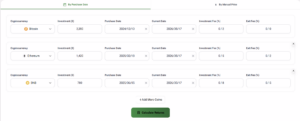
Example of a multi-asset crypto portfolio allocation showing Bitcoin, Ethereum, and BNB with different investment sizes, entry dates, and fee structures.
For example, a 50% gain in a small position may have minimal impact on the overall portfolio. Meanwhile, a 10% gain in a larger position can define the final outcome.
Because of this, focusing only on price movement often leads to misinterpretation, especially when evaluating crypto portfolio profit and loss across multiple assets.
Moreover, allocation directly influences risk. A heavily concentrated position increases exposure, while a balanced distribution can reduce volatility. Therefore, allocation determines both the upside potential and the downside risk.
How Capital Distribution Shapes Portfolio Behavior
Every portfolio has a structure, whether you design it intentionally or not. This structure defines how the portfolio reacts to changes in the market.
When you concentrate capital in a few assets, performance becomes more volatile. Gains can be significant, but losses can also escalate quickly. On the other hand, distributing capital across multiple assets can smooth performance, although it may limit extreme gains.
Because of this, allocation is not only about maximizing returns—it also controls how those returns form.
Allocation Impact on Portfolio Behavior
| Allocation Type | Portfolio Behavior | Risk Profile |
|---|---|---|
| Concentrated | High gains, high volatility | Aggressive |
| Balanced | Moderate gains, stable movement | Moderate |
| Defensive | Lower gains, controlled volatility | Conservative |
Source: Allocation behavior based on portfolio construction principles used in financial analysis frameworks (e.g., Investopedia).
As shown above, allocation shapes the character of a portfolio. Therefore, choosing an allocation strategy is effectively choosing how your portfolio will behave.
👉 Insight:
Allocation does not just affect results—it defines the experience of investing.
Why Diversification in Crypto Is Not Always What It Seems
Diversification is often recommended as a way to reduce risk, especially in traditional portfolio theory and financial diversification models.
Many assets move together, especially during strong market trends. As a result, holding multiple coins does not automatically reduce risk. In some cases, it can even increase exposure if those assets are highly correlated.
For example, Bitcoin and Ethereum often move in the same direction. Similarly, many altcoins amplify broader market movements. Therefore, adding more assets without considering their behavior may not improve stability.
Because of this, you should evaluate diversification based on how assets interact—not just how many assets you hold.
How Risk Emerges From Allocation Decisions
Risk is often associated with asset selection. However, in reality, allocation creates risk through capital distribution.
For instance, allocating a large portion of capital to a single volatile asset increases overall portfolio risk. Even if that asset performs well, the exposure remains high. On the other hand, distributing capital across different assets can reduce sensitivity to individual price movements.
Additionally, risk compounds when multiple positions face similar market conditions. This is why understanding allocation is critical for managing overall exposure.
👉 Insight:
Risk is not defined by what you hold—it is defined by how much you allocate to it.
How to Think About Allocation Before Making Portfolio Decisions
Before adjusting allocation, it is important to understand your objective. Some investors prioritize growth, while others focus on stability. These objectives require different allocation strategies.
For example, a growth-focused portfolio may allocate more capital to high-volatility assets. In contrast, a stability-focused portfolio may distribute capital more evenly to reduce fluctuations.
However, the key is consistency. Frequent changes in allocation based on short-term market movements often lead to unstable results. Instead, allocation should follow a structured approach aligned with long-term goals.
Why Most Investors Mismanage Allocation Without Realizing It
Many investors believe they are diversified, yet their portfolios behave like concentrated positions. This usually happens because they make allocation decisions without a clear framework.
Common patterns include overexposure to a single asset, adding new positions without adjusting existing ones, and reacting to market trends instead of following a strategy. These behaviors gradually increase risk while reducing consistency.
Because these changes happen over time, investors often fail to notice them immediately. As a result, portfolios can drift away from their intended structure.
👉 Insight:
Portfolio risk often increases gradually—not suddenly.
How a Crypto Portfolio Calculator Helps Structure Allocation Decisions
A crypto portfolio calculator provides a structured view of how capital is distributed, especially when using a crypto portfolio tracker and calculator to monitor allocation changes and performance across multiple assets.
By aligning asset values, allocation percentages, and exposure, it becomes easier to evaluate whether the portfolio is balanced. This helps investors make informed adjustments rather than reactive decisions.
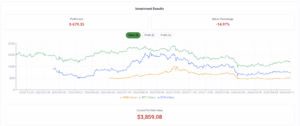
Example of portfolio performance and exposure analysis showing how Bitcoin, Ethereum, and BNB contribute differently to overall risk and return.
This makes it easier to adjust allocation and manage risk more effectively.
How Risk Builds in a Crypto Portfolio Beyond Individual Assets
After defining how capital is allocated, the next step is understanding how risk develops across the portfolio. While many investors evaluate risk at the asset level, portfolio risk behaves differently. A single position does not determine it—it emerges from how all positions interact.
At first, individual positions may appear manageable. However, when multiple assets combine, their effects overlap. As a result, the portfolio can become significantly more sensitive to market movements than expected.
For example, holding several assets that react similarly to market conditions increases overall exposure. Even if each position seems balanced on its own, their combined effect can amplify both gains and losses. Therefore, you must always evaluate risk at the portfolio level, not just at the position level.
👉 Insight:
Portfolio risk is created by interaction—not by isolation.
Why Correlation Matters More Than Diversification in Crypto
Diversification is often used as a way to reduce risk. However, in crypto markets, diversification alone does not guarantee stability. This happens because many assets move together, especially during strong market trends.
Correlation measures how assets behave relative to one another. When correlation is high, assets tend to move in the same direction. As a result, holding multiple assets may not reduce risk—it may increase it.
For instance, Bitcoin, Ethereum, and many altcoins often follow similar trends. During market rallies, they rise together. During downturns, they fall together. Because of this, a portfolio that appears diversified may still behave like a single large position.
Correlation Impact on Portfolio Exposure
| Correlation Level | Portfolio Behavior | Risk Outcome |
|---|---|---|
| High Correlation | Assets move together | Amplified gains and losses |
| Moderate Correlation | Partial independence | Balanced risk |
| Low Correlation | Independent movement | Reduced overall volatility |
Source: Correlation behavior based on multi-asset portfolio theory and observed crypto market dynamics (e.g., Investopedia).
As shown above, correlation defines how effective diversification really is. Therefore, managing correlation matters more than simply increasing the number of assets.
👉 Insight:
True diversification comes from different behavior—not from more assets.
How Total Exposure Changes Portfolio Risk Dynamics
Exposure refers to how much of the market your portfolio effectively controls. In leveraged environments, this can increase rapidly. However, even without leverage, exposure grows as you add more positions.
For example, allocating capital across multiple assets increases total market involvement. If those assets move together, exposure compounds. This means that small market changes can lead to larger portfolio movements.
Moreover, investors often underestimate exposure because it is distributed across positions. They may feel diversified, yet their total exposure remains high. As a result, risk becomes hidden within the structure of the portfolio.
👉 Insight:
Exposure is not always visible—it is embedded in how positions combine.
Why Adding More Assets Does Not Always Reduce Risk
A common assumption in portfolio construction is that adding more assets lowers risk. While this may work in traditional markets, it is less reliable in crypto.
When assets are highly correlated, adding more positions increases exposure without improving balance. For example, holding multiple altcoins that follow Bitcoin does not create diversification—it increases sensitivity to Bitcoin’s movement.
Additionally, small allocations in many assets can create fragmentation. This makes it harder to track performance and manage exposure effectively.
Because of this, portfolio design should focus on allocation quality rather than the number of assets.
How Risk and Allocation Interact Over Time
Risk is not static. It evolves as market conditions change. A portfolio that appears balanced in one environment may become unstable in another.
For instance, during low volatility periods, risk may seem controlled. However, when volatility increases, correlated assets can move sharply together. As a result, exposure increases and portfolio performance becomes more unpredictable.
This dynamic nature of risk makes continuous monitoring essential. You should review allocation decisions periodically to ensure that the portfolio remains aligned with its intended structure.
Why Portfolio Stability Depends on Structural Balance
Stability in a portfolio does not come from eliminating risk. Instead, it comes from balancing different sources of exposure.
For example, combining assets with different behaviors can reduce overall volatility. Similarly, adjusting allocation based on market conditions can help maintain stability.
However, this balance requires structure. Without a clear framework, portfolios tend to drift. Over time, small adjustments accumulate and change the overall risk profile.
👉 Insight:
Portfolio stability is maintained through structure—not through prediction.
How a Crypto Portfolio Calculator Helps Manage Risk and Exposure
A crypto portfolio calculator provides visibility into how allocation, correlation, and exposure interact. Instead of evaluating each position separately, it allows investors to view the portfolio as a unified system.
By analyzing how assets contribute to total exposure, investors can identify areas of imbalance. This makes it easier to adjust allocation and manage risk more effectively.
Moreover, consistent tracking helps reveal patterns over time. Investors can see how their portfolio responds to different market conditions and refine their strategy accordingly.
Why Portfolio Rebalancing Is Essential for Maintaining Allocation Strategy
After defining allocation and understanding risk and correlation, the final step is maintaining that structure over time. This is where rebalancing becomes essential. Without it, even the best allocation strategy gradually loses its effectiveness.
At the beginning, a portfolio may be well balanced. However, as markets move, different assets grow at different rates. As a result, allocation shifts naturally.
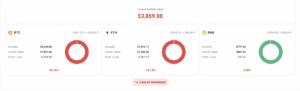
Example of portfolio allocation drift over time showing how Bitcoin, Ethereum, and BNB change in weight as market prices move.
A position that performs well becomes a larger part of the portfolio, while weaker positions shrink.
Because of this, the original structure changes—even if you make no new decisions. Over time, this drift can significantly alter both performance and risk. Therefore, rebalancing is not about changing strategy—it is about preserving it.
👉 Insight:
A portfolio does not stay balanced—it drifts with market movement.
How Rebalancing Affects Risk and Performance Over Time
Rebalancing involves adjusting allocations back to their intended levels. While this may seem like a simple process, it significantly impacts both performance and risk.
When an asset grows beyond its target allocation, it increases exposure. This can amplify gains, but it also increases risk. By rebalancing, investors reduce this exposure and bring the portfolio back to a controlled structure.
At the same time, rebalancing enforces discipline. Instead of chasing high-performing assets, it maintains consistency in allocation. This helps prevent overconcentration and reduces long-term volatility.
However, rebalancing is not about maximizing short-term returns. It is about maintaining stability and controlling risk over time.
When and How to Rebalance a Crypto Portfolio
Timing is one of the most important aspects of rebalancing. While the concept is simple, execution requires consistency.
Some investors rebalance at fixed intervals, such as monthly or quarterly. Others adjust only when allocation deviates beyond a certain threshold. Both approaches can be effective, as long as you apply them consistently.
However, frequent rebalancing may lead to unnecessary transaction costs. On the other hand, infrequent rebalancing allows the portfolio to drift too far from its intended structure. Therefore, finding a balance is essential.
Moreover, rebalancing should not be driven by emotion. Reacting to short-term price movements often leads to poor decisions. Instead, it should follow a predefined framework.
How Execution Decisions Affect Allocation Outcomes
Even with a clear strategy, execution plays a critical role in determining results. Small decisions—such as when to adjust positions or how much to reallocate—can have a meaningful impact over time.
For example, gradually adjusting allocation may produce smoother results than making large changes at once. Similarly, maintaining discipline during volatile periods helps preserve structure.
Execution also affects consistency. Without a clear process, investors may apply different rules at different times. This inconsistency leads to unpredictable outcomes.
👉 Insight:
A good strategy without consistent execution produces inconsistent results.
From Allocation Strategy to a Repeatable Decision Framework
A strong portfolio allocation strategy should evolve into a repeatable decision framework. This ensures that investors do not make decisions randomly, but follow a structured process.
A practical framework typically includes:
defining target allocation for each asset
monitoring how allocation changes over time
identifying when rebalancing is required
adjusting positions to restore balance
However, the key is not complexity—it is consistency. A simple framework applied consistently is more effective than a complex one used sporadically.
An AI portfolio monitoring workflow can track allocation drift, risk limits and review triggers between scheduled reviews, while leaving rebalancing decisions and trade execution under the investor’s written policy.
Why Most Investors Fail to Maintain Allocation Discipline
Maintaining allocation discipline is often more difficult than creating a strategy. This is because market conditions constantly challenge decisions.
For instance, strong-performing assets create pressure to increase allocation. At the same time, investors may ignore or abandon underperforming assets prematurely. These reactions gradually distort the portfolio.
Additionally, emotional decisions often override structured frameworks. Fear and greed lead to adjustments that are not aligned with long-term strategy.
Because of this, discipline becomes a key factor in portfolio performance.
👉 Insight:
Consistency in allocation matters more than accuracy in prediction.
How a Crypto Portfolio Calculator Supports Rebalancing and Execution
A crypto portfolio calculator simplifies the process of maintaining allocation. By providing a clear view of current distribution, it helps investors identify when adjustments are needed.
Instead of estimating changes, investors can see exactly how allocation has shifted. This allows for precise rebalancing decisions.
Moreover, consistent tracking helps maintain discipline. When investors monitor allocation regularly, it becomes easier to follow a structured approach rather than reacting to market noise.
Final Conclusion: Allocation Is a Continuous Process, Not a One-Time Decision
A crypto portfolio allocation strategy does not end with initial decisions. It evolves over time as markets move and portfolios change.
Tracking, risk management, and rebalancing all contribute to maintaining a stable structure. Without these elements, even well-designed portfolios can become unbalanced.
Therefore, successful investing is not just about selecting assets—it is about managing how those assets interact over time.
👉 Final Insight:
Long-term portfolio success is driven by disciplined allocation, not by short-term market predictions.
Turn Allocation Into a Working System
Allocation works best as part of one portfolio process. Start with the crypto portfolio management guide, then connect your weights to crypto diversification and practical risk-management rules.
Use a portfolio rebalancing strategy to keep the plan on track and a portfolio tracker and calculator to review the result over time.