
- What Is Position Size in Crypto and How Much Should You Invest Per Trade?
- Position Size vs Risk per Trade (Context for Calculation)
- How to Calculate Crypto Position Size Based on Risk (Not Guesswork)
- Example (Risk-Based Position Sizing)
- Why Stop Loss Determines Position Size (and Not the Other Way Around)
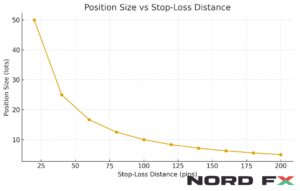
- Stop Distance and Its Effect on Size
- How Risk per Trade and Account Size Shape Your Exposure
- Where Most Traders Go Wrong with Position Sizing
- Using a Crypto Position Size Calculator Before You Enter
- How to Adjust Crypto Position Size Across Multiple Trades (Portfolio Risk Exposure)
- Portfolio-Level Position Sizing: How Much Should You Risk Across All Trades?
- Single Trade vs Portfolio Risk (Crypto Position Sizing Context)
- How Market Correlation Affects Position Size in Crypto
- Correlation Impact on Position Sizing
- Position Sizing in High Volatility vs Low Volatility Markets
- Volatility-Based Position Size Adjustment
- Why Risk Stacking Leads to Hidden Losses in Crypto Trading
- How to Maintain Consistent Position Sizing Over Time
- Using a Crypto Position Size Calculator in Real Market Conditions
- Key Takeaways: Advanced Crypto Position Sizing
- Risk-Adjusted Position Sizing in Crypto (Why Position Size Alone Is Not Enough)
- How Risk-Reward Ratio Affects Position Size Decisions in Crypto
- Risk vs Reward in Position Sizing Context
- Why Maximizing Position Size Does Not Maximize Profit
- How to Build a Consistent Position Sizing Strategy in Crypto
- From Position Size to Decision Framework (How Everything Connects)
- Why Most Traders Remain Inconsistent Despite Knowing Position Sizing
- Using a Crypto Position Size Calculator as a Decision Tool (Not Just a Formula)
- Final Takeaways: How Much Should You Invest in Each Crypto Trade
- Final Conclusion: Position Size Is a Risk Decision, Not a Profit Tool
Most traders focus on finding the right entry. However, far fewer pay attention to how much they should invest. A crypto position size calculator helps answer this question by defining risk before entering a trade.
A crypto position size calculator does not predict the market; instead, it structures your exposure. Rather than asking “Will this trade work?”, it reframes the question to “If it fails, how much will it cost me?”. As a result, that shift—from prediction to control—is what separates consistent performance from random outcomes.
👉 Insight:
In volatile conditions, position size amplifies uncertainty faster than it amplifies opportunity. Therefore, many losses occur even when the market eventually moves in the expected direction.
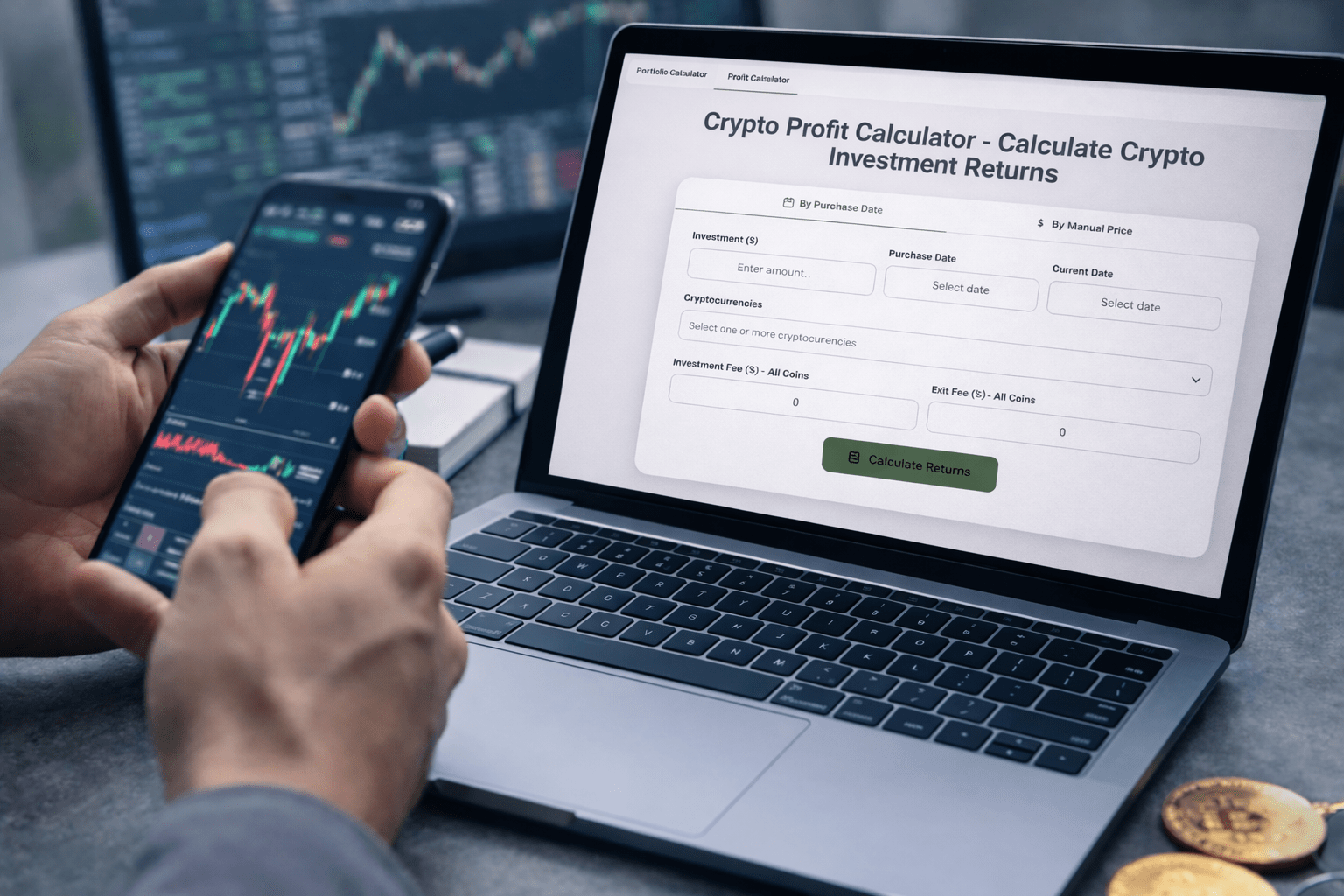
To better understand how position size affects real outcomes, you can use a crypto profit calculator to simulate profit and loss scenarios under different market conditions before entering a trade.
What Is Position Size in Crypto and How Much Should You Invest Per Trade?
Position size is the portion of your capital committed to a single trade. At first glance, this looks like a simple allocation choice. However, in practice, it is a constraint that defines your maximum loss.
Consider two traders taking the same setup. One allocates 5% of their account; the other allocates 40%. A 10% adverse move produces radically different consequences. As a result, the first trader absorbs a manageable drawdown, while the second faces a recovery problem that may require multiple successful trades to offset.
Therefore, the question “how much should I invest in crypto per trade” is not about opportunity—it is about survivability.
Position Size vs Risk per Trade (Context for Calculation)
| Component | Role in Decision | Keyword Context |
|---|---|---|
| Position Size | Capital committed | crypto position size |
| Risk per Trade | Max loss allowed | risk per trade crypto |
| Stop Loss | Invalidates the trade | stop loss crypto |
| Account Size | Total capital base | account size trading |
When these elements are aligned, position sizing becomes consistent. However, when they are not, results become unpredictable.
How to Calculate Crypto Position Size Based on Risk (Not Guesswork)
Many traders default to fixed dollar amounts. However, the problem is that markets do not offer fixed risk. A $1,000 position with a 2% stop is fundamentally different from the same position with a 10% stop. In other words, the risk is not the position—it is the distance to invalidation.
Therefore, the structured approach starts with risk, not size.
- Define account size
- Set risk per trade (commonly 1–2%)
- Identify stop-loss level
- Measure the price distance between entry and stop
- Derive position size from that distance
👉 Position Size = (Account Risk) / (Stop-Loss Distance)
This formula provides a simplified structure for calculating position size. However, in real trading conditions, profit outcomes are also affected by factors such as fees, multiple entries, and execution price. For a more detailed breakdown, you can explore how to calculate crypto profit correctly after multiple buys and fees.
Example (Risk-Based Position Sizing)
- Account: $5,000
- Risk per trade: 2% → $100
- Entry: $20,000
- Stop: $19,000 (distance = $1,000)
👉 Position size ≈ $100 / $1,000 = 0.1 BTC (notional equivalent)
This keeps the loss capped at $100 regardless of where the entry sits. Therefore, position size remains consistent even when market conditions change.
👉 Insight:
Position sizing converts a trade from “potentially large win/large loss” into “defined loss/variable gain”.
Why Stop Loss Determines Position Size (and Not the Other Way Around)
A common mistake is choosing size first and adjusting the stop later. However, this reverses the logic. The stop loss defines where the trade is wrong; therefore, position size must adapt to that definition.
In quiet markets, tighter stops may be valid, allowing larger size. However, under high volatility, wider stops are required, which forces smaller positions. As a result, ignoring this relationship leads to either premature exits or oversized exposure.
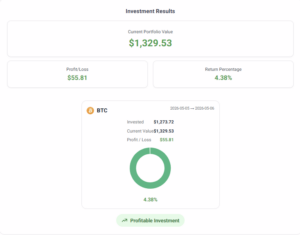
The following example focuses on how position size affects profit and loss under the same market conditions.

Example showing how position size impacts profit and loss in crypto trading using real bitcoin market data.
As shown above, even a relatively small percentage move in price can lead to different profit outcomes depending on the size of the position. Therefore, position size directly determines how much you gain or lose under the same market conditions.
Stop Distance and Its Effect on Size
| Stop Distance | Market Context | Position Implication |
|---|---|---|
| Tight (≈2%) | Low volatility | Larger size possible |
| Medium (≈5%) | Normal conditions | Balanced size |
| Wide (≈10%+) | High volatility | Smaller size required |
👉 Insight:
Under high volatility, increasing position size does not increase edge—it increases variance.
How Risk per Trade and Account Size Shape Your Exposure
Risk per trade is the only variable you fully control. Everything else—price, timing, volatility—is external. Therefore, keeping risk constant across trades stabilizes outcomes over time. This approach aligns with widely used risk management principles in financial markets.
- Conservative approach (≈1%) prioritizes longevity
- Balanced approach (≈2%) trades off growth and safety
- Aggressive approach (≥3%) accelerates both gains and drawdowns
👉 Insight:
Recovery math is asymmetric: a 50% loss requires a 100% gain to break even. Therefore, position sizing helps you avoid entering that equation in the first place.
Where Most Traders Go Wrong with Position Sizing
The mistakes are rarely technical; they are behavioral. In most cases, traders break their own rules under pressure. As a result, position sizing becomes inconsistent.
- Using fixed amounts regardless of stop distance
- Increasing size after losses to “recover faster”
- Ignoring portfolio exposure when multiple positions are open
- Treating high-conviction trades as justification for larger risk
Each of these breaks the link between risk and size. Consequently, over time, that break shows up as inconsistent performance.
Using a Crypto Position Size Calculator Before You Enter
Manual calculations clarify the logic. However, real trading requires consistency and speed. Therefore, a crypto position size calculator enforces structured decision-making.
👉 Insight:
Without a predefined position size, every trade becomes an uncontrolled experiment.
How to Adjust Crypto Position Size Across Multiple Trades (Portfolio Risk Exposure)
Position sizing does not operate in isolation. While calculating risk for a single trade is important, the real challenge emerges when multiple positions are open at the same time. In practice, many traders manage each trade correctly but still experience large drawdowns because their total portfolio exposure becomes too high.
For example, risking 2% on one trade may seem conservative. However, if five positions are open simultaneously, the effective exposure can approach 10%. Therefore, even a normal market pullback can translate into a significant portfolio loss.
As a result, position sizing must be evaluated at the portfolio level, not just per trade.
👉 Insight:
In most cases, traders do not fail because of a single position—they fail because of cumulative exposure across multiple trades.
Portfolio-Level Position Sizing: How Much Should You Risk Across All Trades?
To maintain consistency, traders need to define not only risk per trade but also maximum total risk exposure.
A structured approach typically includes:
- Risk per trade (e.g., 1–2%)
- Maximum portfolio risk (e.g., 5–8%)
- Correlation between assets
However, the key is not the numbers themselves—it is the consistency of applying them.
When multiple positions are aligned in the same market direction, risk compounds faster than expected. Therefore, exposure should be adjusted accordingly.
Single Trade vs Portfolio Risk (Crypto Position Sizing Context)
| Scenario | Risk per Trade | Number of Trades | Total Exposure |
|---|---|---|---|
| Isolated Trade | 2% | 1 | 2% |
| Moderate Exposure | 2% | 3 | 6% |
| High Exposure | 2% | 5 | 10% |
As shown above, the difference between controlled and excessive risk is not the size of a single trade, but the number of overlapping positions.
👉 Insight:
Risk compounds across trades—even when each individual trade appears controlled.
How Market Correlation Affects Position Size in Crypto
Not all trades are independent. In crypto markets, many assets move together, especially during strong trends or high volatility periods.
For instance, holding positions in Bitcoin, Ethereum, and altcoins simultaneously may seem diversified. However, under most market conditions, these assets are positively correlated. Therefore, a single market move can impact all positions at once.
As a result, position size should be adjusted based on correlation, not just individual setups.
Correlation Impact on Position Sizing
| Market Condition | Asset Behavior | Position Size Strategy |
|---|---|---|
| Low Correlation | Independent movement | Standard sizing |
| Moderate Correlation | Partial overlap | Slight reduction |
| High Correlation | Synchronized movement | Reduce exposure significantly |
👉 Insight:
Diversification in crypto often appears stronger than it actually is. In reality, correlation reduces true diversification.
Position Sizing in High Volatility vs Low Volatility Markets
Market conditions directly influence how position size should be adjusted. While the formula remains the same, its application changes depending on volatility.
In low-volatility environments, tighter stop-loss levels are typically sufficient. Consequently, traders can maintain larger position sizes while keeping risk controlled.
However, in high-volatility conditions, price swings become wider. Therefore, stop-loss distances must increase, which naturally reduces position size.
Volatility-Based Position Size Adjustment
| Volatility Level | Market Behavior | Position Size Approach |
|---|---|---|
| Low | Stable movement | Larger positions |
| Medium | Normal fluctuation | Balanced sizing |
| High | Wide price swings | Smaller positions |
👉 Insight:
In volatile markets, reducing position size is not defensive—it is necessary for survival.

Higher volatility requires wider stop-loss levels, which reduces position size to maintain consistent risk per trade in crypto markets.
Why Risk Stacking Leads to Hidden Losses in Crypto Trading
One of the least recognized problems in position sizing is risk stacking. This occurs when multiple trades expose the portfolio to the same underlying risk.
For example, entering several long positions during a bullish trend may feel logical. However, if the market reverses, all positions can move against you simultaneously.
Therefore, even correctly sized trades can produce unexpected losses when risk is stacked.
👉 Insight:
Risk stacking is invisible during entry but obvious during drawdowns.
How to Maintain Consistent Position Sizing Over Time
Consistency is more important than precision. Even a well-designed position sizing model fails if it is not applied consistently.
Over time, traders tend to:
- Increase size after wins
- Increase risk after losses
- Ignore rules under pressure
However, these behaviors introduce variability that cannot be controlled by strategy alone.
Therefore, maintaining consistent position sizing requires discipline more than calculation.
👉 Insight:
A consistent position sizing model outperforms an inconsistent “perfect” model.
Using a Crypto Position Size Calculator in Real Market Conditions
While manual calculations provide clarity, real trading environments require speed and consistency. This is where a crypto position size calculator becomes essential.
Instead of recalculating risk for every trade, a structured tool allows you to:
- Maintain consistent risk per trade
- Adjust for volatility automatically
- Manage portfolio exposure
- Reduce emotional decision-making
👉 Insight:
Without consistent position sizing, performance becomes a function of randomness rather than strategy.
Key Takeaways: Advanced Crypto Position Sizing
- Position size must be evaluated at both trade and portfolio levels
- Total exposure matters more than individual trade size
- Correlation reduces true diversification
- Volatility requires dynamic adjustment of position size
- Consistency in execution is more important than precision in calculation
Risk-Adjusted Position Sizing in Crypto (Why Position Size Alone Is Not Enough)
Position size, on its own, does not define a good trade. While it controls how much you risk, it does not explain whether that risk is justified. Therefore, a more advanced perspective is required—one that connects position size with expected return.
This is where risk-adjusted position sizing becomes important.
In practice, two trades with the same position size can produce very different outcomes. One may offer a strong reward relative to risk, while the other may not justify the exposure at all. As a result, position sizing should not only limit losses but also align with the potential reward structure.
👉 Insight:
Position size controls downside, but risk-adjusted sizing determines whether the trade is worth taking at all.
How Risk-Reward Ratio Affects Position Size Decisions in Crypto
Every trade carries a relationship between risk and reward. While position size defines how much you lose if the trade fails, the risk-reward ratio determines whether the trade makes sense in the first place.
For example, risking $100 to make $100 is fundamentally different from risking $100 to make $300. Even with identical position sizes, the second scenario offers a more efficient outcome over time.
Therefore, position sizing should always be evaluated alongside expected return.
Risk vs Reward in Position Sizing Context
| Trade Type | Risk | Potential Reward | Implication |
|---|---|---|---|
| Low Efficiency | $100 | $100 | Limited edge |
| Balanced Trade | $100 | $200 | Moderate edge |
| High Efficiency | $100 | $300+ | Strong edge |
As shown above, position size without context can be misleading. However, when combined with reward potential, it becomes part of a structured decision.
👉 Insight:
Over time, consistent exposure to high risk-reward setups matters more than increasing position size.
Why Maximizing Position Size Does Not Maximize Profit
A common misconception in crypto trading is that larger positions lead to higher profits. While this may be true in isolated cases, it fails under repeated conditions.
In reality, increasing position size amplifies both gains and losses. However, evaluating performance based on profit alone can be misleading, especially when capital efficiency is ignored. To better understand how return efficiency impacts your strategy, you can learn how to calculate crypto ROI across different market conditions.
Moreover, larger positions introduce psychological pressure. As position size increases, decision-making tends to become more reactive and less structured.
👉 Insight:
Position size should be optimized for consistency, not maximized for short-term gain.
How to Build a Consistent Position Sizing Strategy in Crypto
A position sizing strategy is not just a formula—it is a repeatable framework. Without consistency, even the best calculations lose their value.
A structured approach typically includes:
- Fixed risk per trade
- Defined maximum portfolio exposure
- Adjustment based on volatility
- Consideration of correlation
- Alignment with risk-reward ratio
However, the key factor is not the complexity of the model. Instead, it is the ability to apply it consistently across different market conditions.
From Position Size to Decision Framework (How Everything Connects)
At a higher level, position sizing is not just a calculation—it is part of a broader decision system.
A complete trade decision includes:
- Entry (where you enter)
- Stop loss (where you are wrong)
- Position size (how much you risk)
- Target (what you expect to gain)
When these elements are aligned, trading becomes structured rather than reactive. Otherwise, outcomes depend on randomness.
👉 Insight:
Position sizing is the bridge between analysis and execution. Without it, even good analysis cannot produce consistent results.
Why Most Traders Remain Inconsistent Despite Knowing Position Sizing
Understanding position sizing is not the same as applying it. In practice, inconsistency often comes from behavioral factors rather than technical gaps.
Over time, traders tend to deviate from their rules, especially after wins or losses. For instance, after a series of successful trades, risk tolerance often increases. Conversely, after losses, traders may attempt to recover faster by increasing position size.
However, both behaviors introduce instability into the system.
👉 Insight:
Inconsistent execution breaks even the best position sizing strategy.
Using a Crypto Position Size Calculator as a Decision Tool (Not Just a Formula)
A crypto position size calculator is often seen as a simple utility. However, its real value lies in enforcing discipline.
Instead of recalculating risk manually, it provides a consistent framework for:
- Translating risk into position size
- Adjusting exposure based on market conditions
- Maintaining alignment between trades
- Reducing emotional decision-making
👉 Insight:
A calculator does not improve your strategy—but it enforces consistency in how you apply it.
Final Takeaways: How Much Should You Invest in Each Crypto Trade
- Position size determines how much you can lose, not how much you will earn
- Risk per trade must be defined before entering any position
- Portfolio exposure matters as much as individual trade size
- Risk-reward ratio defines whether a trade is worth taking
- Consistency in execution is more important than perfect calculation
Final Conclusion: Position Size Is a Risk Decision, Not a Profit Tool
At its core, position sizing is not about maximizing returns. Instead, it is about controlling uncertainty.
In crypto markets, where volatility is constant, survival depends on managing risk more than predicting direction. Therefore, knowing how much to invest in each trade becomes more important than knowing where the market will go.
👉 Final Insight:
Traders who control position size control their downside. Over time, that control is what allows them to stay in the market long enough for their strategy to work.