What Machine Learning Backtesting Means in AI Trading
Machine learning backtesting can be dangerous when traders mistake historical success for real-world reliability. A profitable backtest may look convincing on paper, but it can still fail when…

Browse by learning goal
Every strong investment strategy is tested before it’s trusted. Learn how backtesting and optimization help investors validate decisions, improve accuracy, and build consistent, evidence-based performance models.
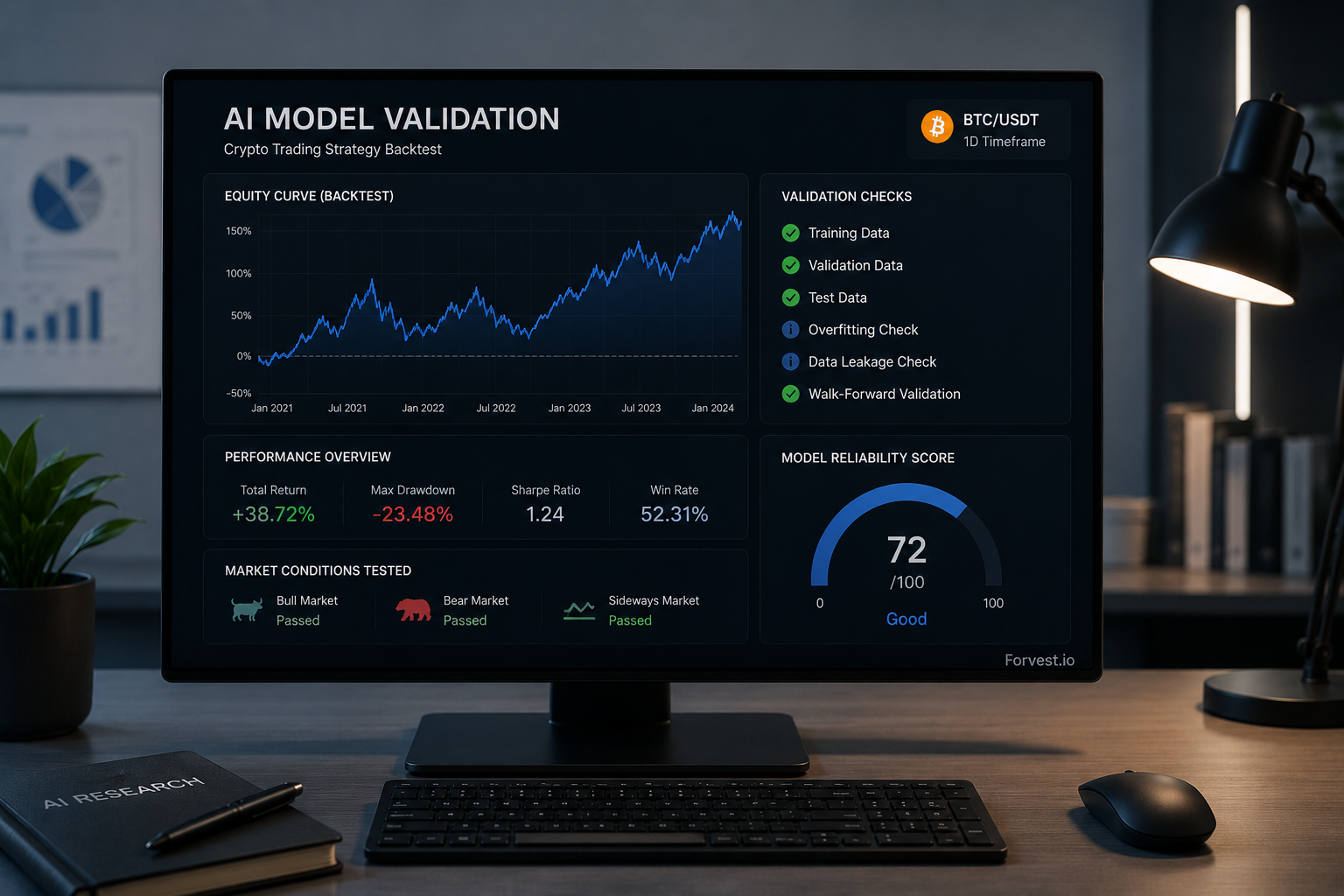
Machine learning backtesting can be dangerous when traders mistake historical success for real-world reliability. A profitable backtest may look convincing on paper, but it can still fail when…
Most failed strategies are victims of bad optimization. This guide shows how to avoid curve fitting with time-based splits, walk-forward testing, parameter plateaus, and realistic cost/liquidity modeling—plus stress…
Crypto backtesting helps traders refine strategies before investing. Learn how to use AI and tools to test your crypto trading approach.
A crypto portfolio backtest estimates how fixed allocation and rebalancing rules behaved on historical data. Use point-in-time data, realistic fees and liquidity assumptions, evaluate drawdown and robustness across…
Avoid costly backtesting mistakes like overfitting, data snooping, and unrealistic assumptions. Learn how to build reliable trading strategies with smarter tests and real data.
Backtesting applies fixed rules to historical data; forward testing observes the same frozen rules on unseen data and real execution conditions. Use backtests to find weak logic and…
Discover the different types of backtests used to evaluate trading strategies. Learn how to apply historical, walk-forward, and forward testing to validate performance.