
Is it safe to connect your exchange API to an AI crypto platform? It can be—if the platform requests only the permissions required for its stated purpose, explains how credentials are protected, and lets you revoke access at any time. The decision should be based on permission scope and operational controls, not on claims that an AI model is advanced or predictive.
Connecting a third-party platform creates a new access path to exchange data or account actions. The practical risk depends on the permissions granted, how the credential is stored, and how quickly the investor can restrict, rotate, or revoke it.
That is why the first question should not be “Is this AI platform secure?”
A better question is:
“Does this platform really need every permission it is asking for?”
This simple shift in thinking changes how investors should evaluate API security.
Why API Permissions Matter More Than Features
Many users judge an AI platform by its dashboards, predictive models, or advertised features. In reality, those features reveal very little about how securely the platform operates. A platform can offer impressive analytics while still introducing unnecessary risk if it requests permissions that exceed its actual purpose.
For that reason, investors should treat every API connection as a trust verification process, not simply a technical setup.
An exchange API is a secure communication interface that allows an external application to interact with your exchange account using permissions that you explicitly choose. Creating an API key does not automatically give a platform unlimited control over your assets. Instead, the permissions attached to the key determine exactly what the platform can access.
Modern cryptocurrency exchanges allow users to define different permission levels before they activate an API key. Some keys only read balances and transaction history. Others place trades, while a small number of permissions allow much more sensitive account actions if users enable them.
As a result, two investors can use the same AI platform and face completely different levels of exposure simply because they configured different API permissions.
This is one of the biggest misconceptions surrounding exchange API security.
The real decision is not whether an API connection is safe.
The real decision is whether every permission requested by the platform is genuinely necessary.
At Forvest, we use one simple principle when evaluating third-party access:
Access should always match purpose.
This principle becomes especially important when evaluating AI crypto portfolio management tools, because different platforms require different levels of access depending on whether they only analyze portfolio data, provide insights, or perform automated actions.
If a platform requests permissions that go beyond the functionality it actually provides, investors should understand why before approving the connection. The more closely requested access aligns with the platform’s purpose, the easier it becomes to evaluate operational risk objectively instead of relying on marketing claims or assumptions.
A Practical Framework for Evaluating API Access
Professional investors rarely accept permission requests at face value. Instead, they compare requested access with the platform’s actual functionality.
If a portfolio monitoring application only displays balances and performance, read-only access is generally sufficient. If an automated execution platform places trades on behalf of users, trading permissions may be justified. However, investors should pause whenever requested permissions appear unrelated to the service being offered and ask for a clear explanation before continuing.
This simple evaluation often reveals far more about a platform’s security posture than broad marketing claims about encryption, artificial intelligence, or enterprise-grade protection.
A practical way to think about API security is to evaluate whether access always matches purpose.
| Permission Requested | Required For | Potential Risk If Misused |
|---|---|---|
| Read-Only Access | Portfolio monitoring, analytics, and reporting | Unnecessary exposure of account information. |
| Trading Permission | Automated order execution | Orders can be executed beyond the user’s intended activity. |
| Withdrawal Permission | Rarely required by analytics or research platforms | Creates the highest level of account risk when unnecessary. |
| Additional Administrative Permissions | Platform-specific operational features | Every permission should have a clearly explained purpose before approval. |
This framework shows why API security is ultimately a decision-making process rather than a purely technical one. Encryption, authentication, and secure infrastructure remain important, but they cannot compensate for unnecessary permissions or poor access management. Investors reduce risk when they understand exactly what they authorize before establishing any API connection.
In the next section, we’ll examine how read-only, trading, and withdrawal permissions differ, why each permission changes your level of risk, and how to determine whether an AI crypto platform requests only the access it truly needs.
Understanding Exchange API Permissions
Before approving any API connection, investors make one decision that determines every action a platform can perform inside their exchange account.
That decision is which exchange API permissions to grant.
Many investors focus on whether an AI crypto platform looks secure. Security-conscious investors begin somewhere else. They first examine the permissions the platform requests because those permissions define the platform’s actual capabilities long before any AI feature becomes relevant.
An API key is not a single level of access. It is a collection of permissions that you approve when creating the key. Those permissions define exactly what a third-party platform can and cannot do inside your exchange account. Since permission structures vary between exchanges, investors should always review the official exchange API documentation before connecting any third-party platform.
Understanding those boundaries is one of the simplest and most effective ways to reduce unnecessary risk before connecting any AI-powered investment platform.
Official Coinbase documentation separates API permissions by capability, while the OWASP Secrets Management Cheat Sheet recommends least privilege, controlled storage, rotation, revocation, and expiration for secrets such as API keys. Use those controls as verification criteria rather than treating any platform label or security badge as proof.
Every Permission Changes Your Risk Profile
One of the biggest misconceptions in cryptocurrency investing is that every API connection creates the same level of access.
It does not.
Most cryptocurrency exchanges allow users to choose which permissions an API key receives. Instead of granting complete account control, exchanges separate access into specific operational permissions. This design allows investors to share only the level of access that a platform genuinely requires.
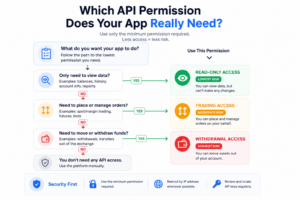
For example, a portfolio analytics platform usually needs permission to read balances, transaction history, and account activity. It does not need the ability to execute trades or withdraw assets. By contrast, an automated execution platform may legitimately require trading permissions because placing orders is part of its core functionality.
This distinction explains why evaluating permissions matters far more than simply asking whether a platform is “safe.”
Careful investors evaluate permissions before they evaluate features.
Features tell you what a platform can do. Permissions tell you what it can do to your account.
That distinction often reveals more about operational risk than long lists of AI capabilities or marketing claims.
Access Should Always Match Purpose
At Forvest, we use one simple principle when evaluating third-party access:
Access should always match purpose.
Every permission should have a clear operational reason.
If investors cannot explain why a platform requires a specific permission, they should investigate further before approving access.
This mindset shifts the conversation away from technical complexity and toward practical decision-making.
Rather than asking whether a permission exists, long-term investors ask whether the platform could still perform its primary function without requesting broader access.
A Practical Permission Evaluation Framework
| Permission | Typical Purpose | Operational Risk |
|---|---|---|
| Read-Only | Portfolio tracking, analytics, reporting | Low operational risk when limited to account visibility. |
| Trading | Automated order execution | Moderate operational risk because the platform can execute market actions. |
| Withdrawal | Asset transfers | High operational risk because assets can potentially leave the account if this permission is misused. |
| Administrative Permissions | Exchange-specific operational functions | Risk depends on the requested capability and should always have a clearly justified business purpose. |
This framework encourages investors to evaluate permissions based on necessity rather than assumptions. Instead of treating every API request as equally risky, users can determine whether each permission directly supports the platform’s advertised functionality or simply expands access without providing additional value.
Why Purpose Matters More Than Permissions Alone
Another principle is equally important.
Permissions define capability. Trust defines whether those capabilities should ever be used.
A read-only API key generally presents less operational risk than a trading key, but investors should still evaluate how the platform stores credentials, protects account data, monitors unusual activity, and allows users to revoke access. Likewise, trading permissions may be entirely reasonable when automated execution is the platform’s primary function.
The goal is not to eliminate every permission.
The goal is to eliminate unnecessary permissions.
That distinction makes API security far easier to evaluate and helps investors make decisions based on observable operational practices instead of assumptions or marketing claims.
In the next section, we’ll examine why read-only, trading, and withdrawal permissions create different levels of operational risk and how investors can decide which permissions an AI crypto platform genuinely needs before connecting an exchange account.
How to Decide Whether an AI Crypto Platform Is Safe Enough to Connect
Is it safe to connect your exchange API to an AI crypto platform? After understanding API permissions, the final decision depends on something much simpler: whether the platform requests only the access it genuinely needs and whether its security practices justify your trust. Investors often spend hours comparing AI features while overlooking the security fundamentals that determine how their exchange account will be protected after the connection is established.
Security is rarely the result of a single feature. Instead, it comes from a series of small decisions that work together to reduce unnecessary exposure. The strongest AI platform is not necessarily the one with the most advanced algorithms or the longest feature list. It is the one that demonstrates a disciplined approach to protecting user access throughout the entire lifecycle of an API connection.
This distinction changes how experienced investors evaluate crypto platforms. Rather than asking, “Does this platform use AI?” they ask, “Has this platform earned the level of access it is requesting?”
A Practical Framework for Making the Final Decision
Every investor eventually reaches the same point: the API key is ready, the platform requests access, and one decision remains.
Should you connect it?
At Forvest, we recommend evaluating that decision through a simple framework instead of relying on marketing claims or assumptions. A trustworthy platform should demonstrate that its security practices match the level of access it requests.
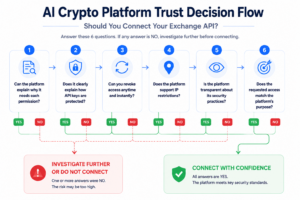
| Evaluation Area | What to Look For | Why It Matters |
|---|---|---|
| Requested Permissions | Only the permissions required for the advertised functionality | Reduces unnecessary operational exposure |
| Security Transparency | Clear explanations of how API credentials are protected | Builds confidence through observable practices rather than promises |
| User Control | Ability to revoke access, regenerate API keys, or disconnect the platform easily | Gives investors control if circumstances change |
| Purpose Alignment | Requested permissions directly support the platform’s primary service | Prevents unnecessary access expansion |
| Ongoing Monitoring | Evidence that unusual account activity is detected and investigated | Helps identify unexpected behavior before it becomes a larger problem |
Notice that none of these criteria depend on how sophisticated the AI appears.
A platform may advertise predictive models, automated insights, or advanced portfolio optimization, but those capabilities should never replace basic security evaluation. AI features create value only after investors are confident that access has been granted responsibly.
This same evaluation mindset applies beyond API connections. Before trusting any crypto service with capital or account access, investors should understand how to evaluate crypto platforms before investing by examining transparency, credibility, security practices, and long-term reliability.
This idea reflects another principle that guides responsible API security:
The quality of an AI platform is measured not only by what it can automate, but also by what it refuses to access unnecessarily.
Platforms that request the smallest practical level of access often demonstrate a stronger security mindset than those asking for broad permissions without clear justification.
Trust Should Be Built, Not Assumed
Many investors think trust begins after connecting an API.
In reality, trust begins before the connection is ever established.
Before granting any platform access to an exchange account, investors should evaluate whether that platform demonstrates transparency, responsible access management, and measurable trust signals. Clear documentation, transparent permission requests, realistic security explanations, and user-controlled access all contribute to better decision-making.
However, security evaluation should not stop at API permissions alone. A platform’s broader reliability, transparency, and operational history can provide additional context when deciding whether it deserves access.
Investors who want to evaluate these factors more systematically can use a crypto platform trust score to compare important trust indicators beyond marketing claims, including transparency, security practices, and overall platform credibility.
Conversely, vague permission requests, unclear documentation, or security claims without supporting evidence deserve additional scrutiny before investors proceed.
This does not mean every platform requesting trading permission should automatically be rejected, nor does it mean every read-only platform is inherently trustworthy. Context always matters.
The Forvest SAFE Framework
Throughout this guide, one consistent idea has emerged.
Access should always match purpose.
That principle applies whether investors are connecting a portfolio tracker, an automated execution platform, or a comprehensive AI research tool.
Likewise, another Forvest principle remains equally important:
Permissions define capability. Trust determines whether those capabilities should ever be granted.
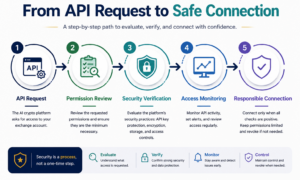
One practical way to apply these principles is through the Forvest SAFE Framework—a simple decision model designed to help investors evaluate API access before connecting any AI crypto platform.
SAFE stands for:
- Scope — Request only the permissions the platform genuinely requires.
- Assess — Review whether the platform clearly explains how it protects API credentials and user data.
- Fit — Confirm that every requested permission directly supports the platform’s intended functionality.
- Evaluate — Make the final decision only after balancing security practices, operational necessity, and your own risk tolerance.
When these four steps are applied together, evaluating API security becomes far less complicated. Instead of relying on fear or marketing language, investors can make decisions based on observable evidence, operational necessity, and proportional access.
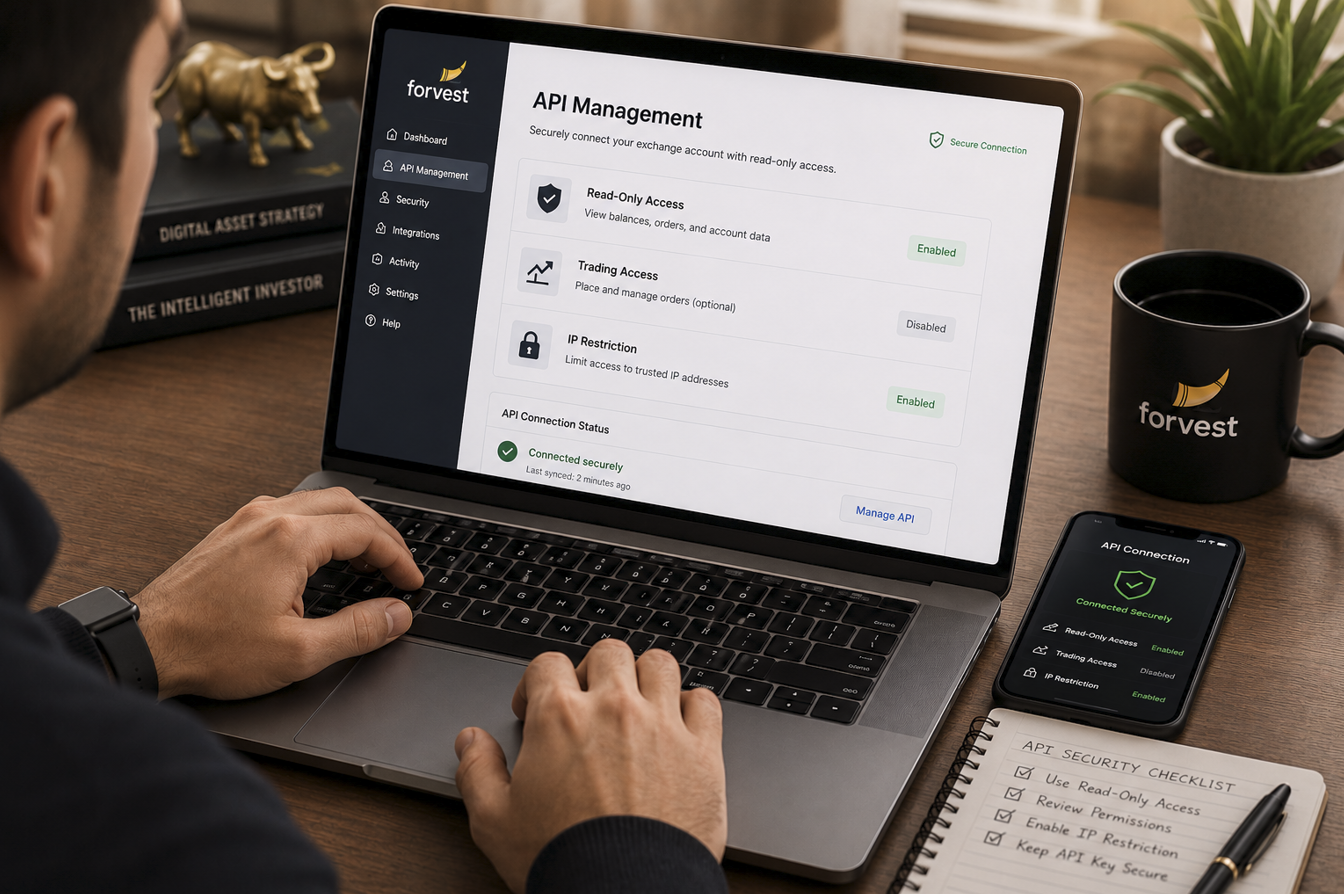
Before connecting, record the key’s permissions, any IP restrictions, its creation date, and the exact revocation path. Use a separate key for each platform, keep withdrawal access disabled unless a documented function truly requires it, and revoke or rotate the key when the service is no longer used or exposure is suspected.
Making Your Final Decision
Ultimately, connecting an exchange API is not about giving a platform unlimited trust. It is about granting carefully chosen permissions that support a specific purpose while maintaining control over the account at every stage.
Investors who consistently follow this approach are more likely to reduce unnecessary risk, avoid excessive permissions, and choose platforms that treat security as a core responsibility rather than a marketing feature.
For users evaluating AI-powered crypto platforms, this framework provides a practical foundation for making informed decisions before connecting any exchange account. It also reflects the broader philosophy behind Forvest: helping investors understand why a platform deserves trust before deciding whether to grant it access.
Is It Safe to Connect an Exchange API to an AI Crypto Platform?
Yes—provided the platform requests only the permissions it genuinely needs, clearly explains how API credentials are protected, and allows users to maintain control over their access. Investors should evaluate permissions, security practices, and operational transparency before connecting any third-party platform.
Investors can apply the Forvest SAFE Framework whenever they evaluate portfolio analytics platforms, AI research tools, portfolio management solutions, or other crypto decision-support systems. Using the same evaluation process across different platforms makes it easier to compare security practices objectively and identify services that request only the level of access their functionality genuinely requires.
Disclaimer
The information in this article is provided for educational purposes only and should not be considered financial, investment, cybersecurity, or legal advice. Every cryptocurrency exchange implements API permissions differently, and security features may change over time. Before connecting an API key to any third-party platform, always review your exchange’s official documentation and evaluate whether the requested permissions align with your own investment objectives and risk tolerance.
Related reading: Use these related guides to apply the framework: decentralized-exchange safety guide.